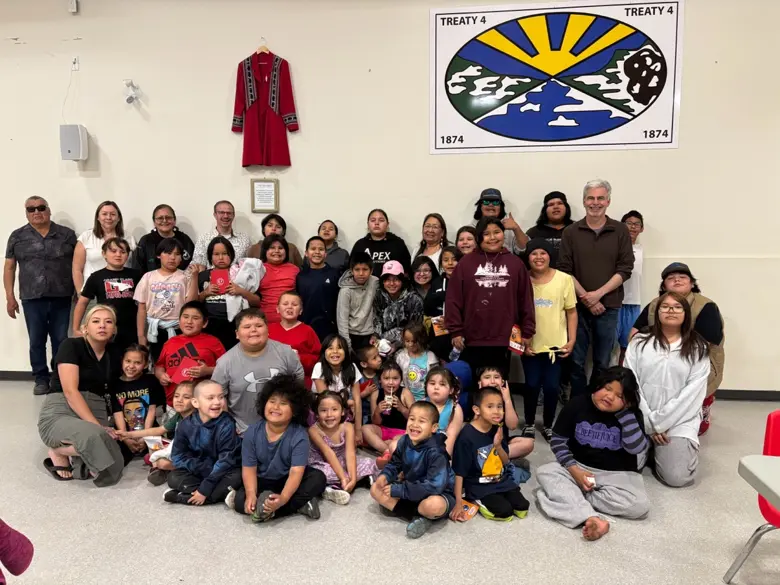
Building Community Capacity Through Climate Monitoring at Tootinaowaziibeeng Treaty Reserve
Background
For generations, the people of Tootinaowaziibeeng Treaty Reserve No. 292 (TTR) have relied on the land, water, forests, and wildlife for their cultural identity, traditional practices, and well-being. Located in western Manitoba, within the Parkland region, the community has witnessed changes in weather patterns, seasonal cycles, water conditions, wildlife behaviour, and vegetation that are becoming increasingly difficult to ignore.
Like many Indigenous communities across Canada, TTR recognized that climate change is no longer a future concern; rather, it is something being experienced today. Elders have long shared observations of changing seasons, shifting wildlife patterns, and environmental conditions that differ from those remembered in earlier generations. These observations reinforced the importance of documenting environmental change while ensuring that Traditional Knowledge remains central to understanding and responding to it.
Building on the momentum created through the TTR Traditional Knowledge Centre for Climate Change Initiative, TTR expanded its climate change work in 2024 by launching the Climate Change Monitoring Program, with support from the Indigenous Community-Based Climate Monitoring Program. Together, these complementary initiatives combine Traditional Knowledge and scientific monitoring to improve understanding of local climate change impacts, strengthen community capacity, and support informed decision-making for future generations.
Building More Than a Monitoring Program
Although collecting environmental data is an important component of the project, TTR’s vision extends much further.
From the beginning, the community recognized that long-term success would depend on developing local skills, strengthening community leadership, and creating opportunities for youth and Elders to work together.
Rather than relying indefinitely on outside experts, the program was intentionally designed to build local capacity so that community members gradually become the people collecting information, maintaining equipment, interpreting results, and ultimately managing the monitoring program themselves.
Every monitoring session has therefore served two purposes:
- collecting valuable environmental information and
- building community capacity
This approach ensures that the knowledge, skills, and experience developed through the project remain within the community long after the project is complete.
Monitoring the Land Through All Four Seasons
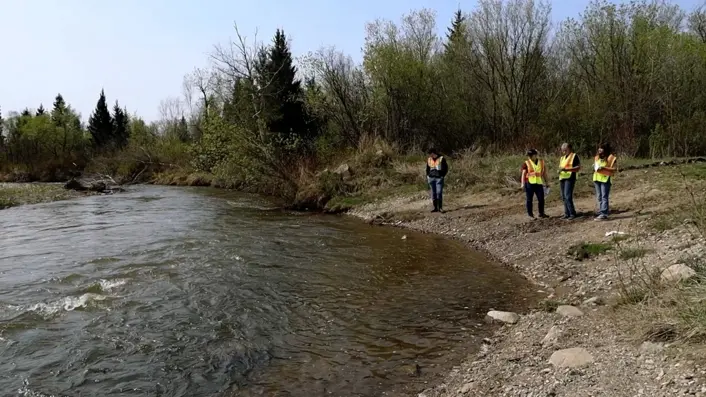
Monitoring takes place throughout the year to establish a long-term environmental baseline while improving understanding of seasonal variability and future environmental trends.
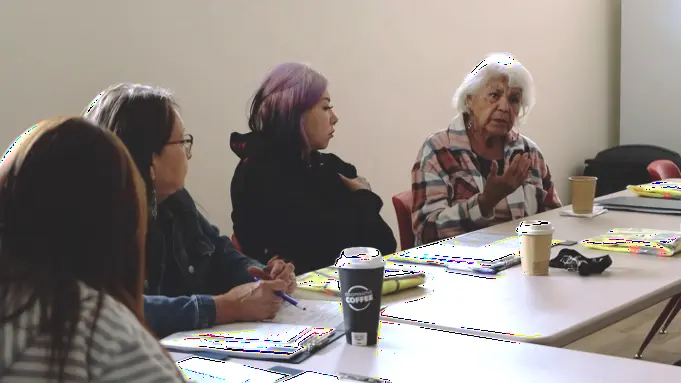
Community youth and Elders participate together in seasonal field sessions where they monitor a broad range of environmental indicators.
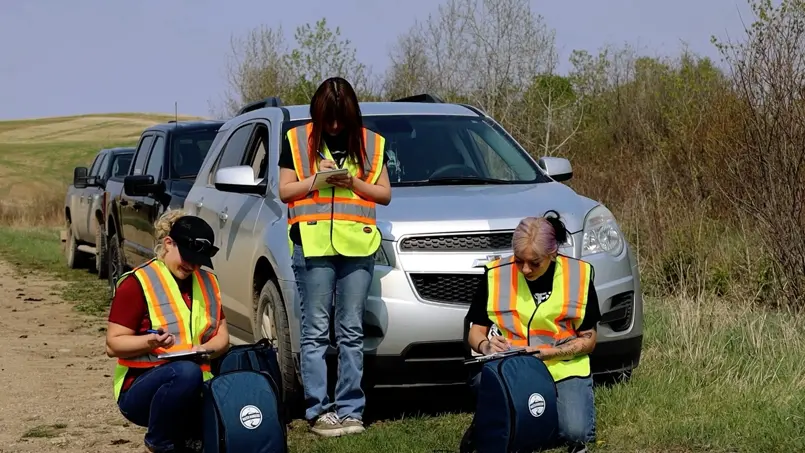
Each monitoring session follows standardized field protocols, including equipment calibration, safety planning, data recording, photo documentation, and quality assurance procedures. These methods ensure that information collected today can be compared consistently over many years.
Where Traditional Knowledge and Science Meet
Perhaps the greatest strength of the program is that it does not treat Traditional Knowledge and scientific monitoring as separate approaches. Instead, they work together.
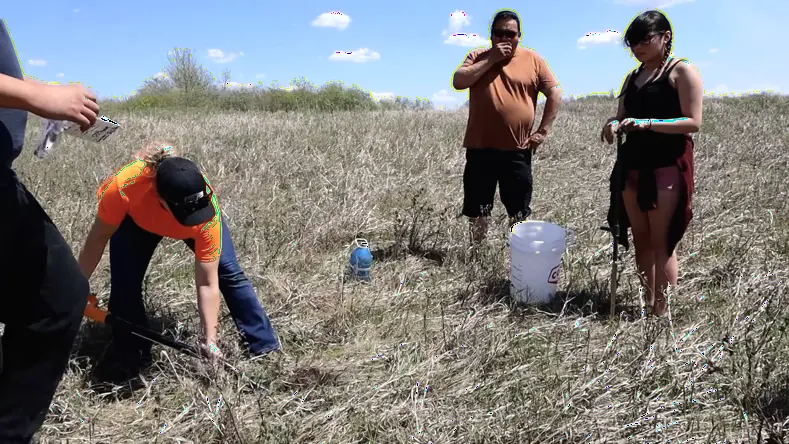
While youth collect field measurements using environmental monitoring equipment, Elders share observations developed through decades of living on the land.
During every monitoring session, conversations naturally emerge about changing seasons, water conditions, wildlife behaviour, and the health of forests and wetlands. Scientific measurements provide measurable evidence that complements these observations.
This combination creates a richer understanding of environmental change and ensures that monitoring reflects both Indigenous ways of knowing and scientific methods.
Youth at the Centre of Climate Action
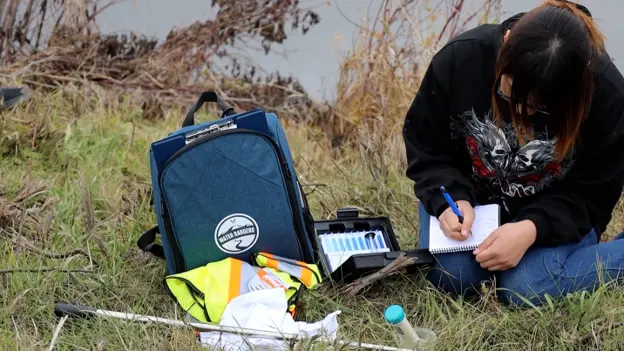
Youth involvement has been one of the most rewarding aspects of the project. Students participate directly in every monitoring session, learning how to operate monitoring equipment, collect environmental data, follow safety procedures, document observations, and maintain monitoring equipment.
Rather than learning about climate change only in a classroom, youth experience it firsthand by working on the land alongside Elders and technical specialists.
As their confidence has grown, so has their understanding of environmental stewardship and their appreciation for the important role they can play in protecting their community’s natural resources.
Many participants are now developing practical skills that can be applied to future environmental stewardship, employment, and community leadership opportunities.
Climate Monitoring Beyond the Field
Recognizing that climate change affects the entire community, TTR has developed several complementary activities that encourage broader participation and awareness.
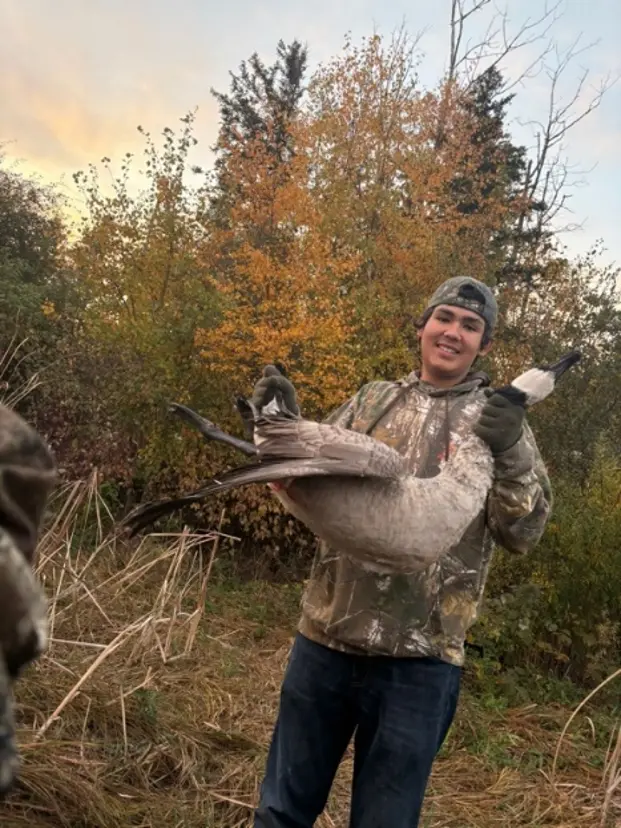
One of these initiatives is the annual Youth Camp, where Elders, youth, Traditional Knowledge holders, and community volunteers come together for land-based learning. Through cultural teachings, environmental discussions, and traditional activities, participants explore the relationship between climate, culture, and stewardship.
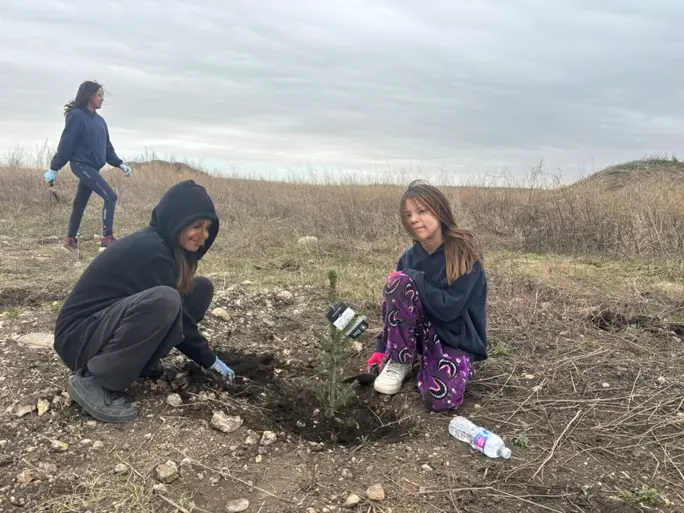
Another important initiative is Plant a Tree Day, held each spring in partnership with Chief Clifford Lynxleg Anishinabe School students. Hundreds of trees have been planted since the program began, giving youth an opportunity to learn about the role trees play in reducing the impacts of climate change while actively contributing to environmental stewardship within their own community.
The program also includes community presentations, educational materials, videos, and an internal Climate Change Portal where monitoring procedures, training resources, and project information are available to community members.
Together, these activities ensure that climate monitoring becomes something the entire community can participate in, not just the monitoring team.
Building Community Capacity
Capacity building has become one of the project’s greatest accomplishments. Throughout the program, community members have received practical training in:
- environmental monitoring techniques
- equipment operation and maintenance
- field safety procedures
- data collection and documentation
- environmental observations
- environmental data interpretation
- project coordination and
- climate change awareness
This gradual transfer of knowledge is helping prepare the community to independently manage the monitoring program over the long term.
Achievements and Looking Forward
The project has successfully established TTR’s first long-term environmental monitoring program and developed the community’s Environmental Baseline and Monitoring Plan.
The project has also established a dedicated community monitoring team that brings together youth and Elders in meaningful, hands-on environmental work. Participation is expected to continue growing, and climate monitoring has become a source of community pride.
As additional years of monitoring are completed, TTR will continue building a long-term environmental record that supports climate change adaptation planning, environmental stewardship, land use planning, resource management, and future community decision-making.
Perhaps the project’s greatest long-term legacy is its role in preparing future generations with the knowledge, skills, and experience needed to continue monitoring, protecting, and stewarding their traditional lands.
Lessons for Other Communities
If TTR could offer one piece of advice to other Indigenous communities beginning a climate monitoring program, it would be this:
Start with your people before your equipment. Monitoring is not simply about collecting environmental data. It is about building relationships, creating opportunities for Elders and youth to learn together, respecting Traditional Knowledge, and developing local capacity that will remain within the community.
Equipment can always be purchased. Building community knowledge, confidence, and leadership takes time, and that is the project’s greatest investment.